Multi Wallet Crypto Portfolio Tracker Guide
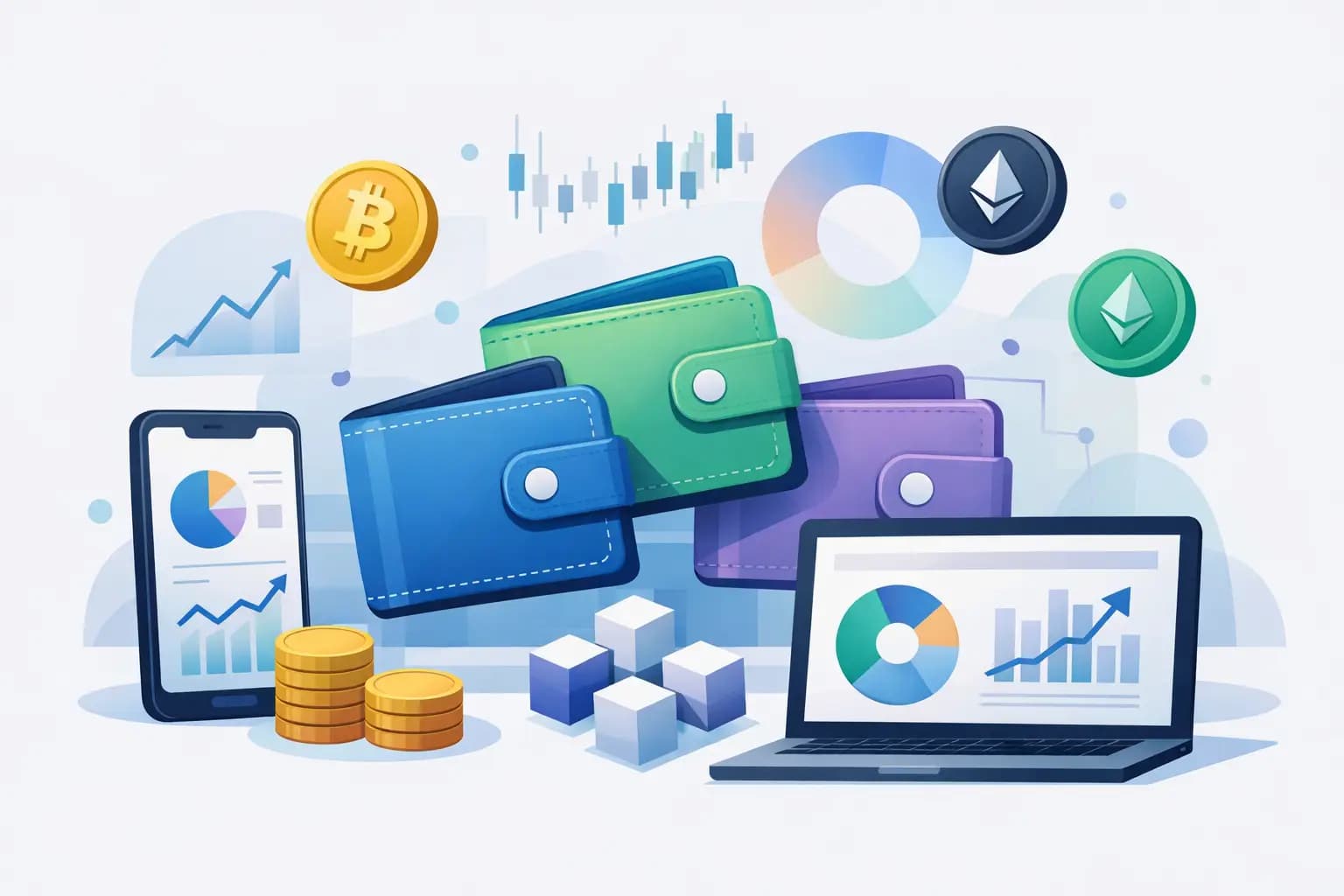
Your BTC may be in one wallet, SOL in another, collateral on a perpetuals venue, USDC in a lending pool, and a few smaller positions sitting on-chain where they are easy to forget. A multi wallet crypto portfolio tracker turns that scattered reality into a usable trading view - before a funding payment, liquidation threshold, or sudden market move makes fragmentation expensive.
For active traders, portfolio tracking is not just about watching a net-worth number rise or fall. It is about seeing deployable capital, concentrated exposure, open leverage, pending rewards, and venue-specific risk early enough to make a decision. The right setup gives you market-wide visibility without asking you to give up custody or hand over execution authority.
Why one-wallet tracking breaks down
A single-wallet dashboard can be useful when you only buy and hold a few assets. It starts failing when your activity spans chains and protocols. Your wallet balance may look healthy while a large portion of your capital is locked as margin elsewhere. A token balance can appear profitable while a perp short has already offset much of that directional exposure.
The problem is not only missing data. It is misleading context. If you own ETH in a wallet, supply ETH-linked collateral through a lending protocol, and hold an ETH perpetual position on another venue, you need to understand the combined position rather than treating each line item as independent.
That becomes more urgent when markets move quickly. A tracker that updates slowly or only shows token balances can leave you checking several apps to answer basic questions: How much USDC is available? Which position has the highest leverage? What is my real SOL exposure? Where am I paying funding?
What a multi wallet crypto portfolio tracker should show
The useful version of a tracker is a command center, not a decorative pie chart. It should unify balances while preserving the details that affect your next move.
Total value, with the right caveats
Total portfolio value is the top-line number, but it needs a clear breakdown. Separate readily available assets from collateral, staked funds, supplied assets, and funds subject to withdrawal conditions. A dollar value that treats every asset as equally liquid can create false confidence during volatility.
Stablecoin balances deserve their own visibility. USDC held in a wallet, committed as trading collateral, and allocated to an earn product have different roles. Seeing those categories separately makes capital allocation more intentional.
Net exposure, not just token balances
Spot balances tell only part of the story. A serious tracker accounts for perpetual futures, open orders, borrowed assets, and offsetting positions. If you hold $10,000 of SOL spot and are short $6,000 of SOL perps, your net directional exposure is closer to $4,000 before considering leverage mechanics, fees, and price movement.
This matters for risk control. Gross exposure shows how much market activity you have on. Net exposure shows the directional bet you are actually carrying. Both numbers are useful, and neither should replace the other.
Venue-level margin and liquidation risk
Cross-venue trading creates a second layer of risk: collateral is not always shared. A profitable position on one decentralized venue does not protect a losing position on another if the balances are isolated.
Your tracker should make it easy to see margin utilization, liquidation distance, unrealized profit and loss, and funding by venue. For perpetuals traders, this view can be more actionable than a portfolio allocation chart. A position can be directionally correct and still be poorly structured if leverage is too high or funding is steadily eroding the trade.
Asset and chain concentration
A portfolio spread across several wallets is not automatically diversified. Five wallets holding the same asset are still one concentrated thesis. The tracker should aggregate by asset, chain, and exposure type so you can spot overlap.
Chain concentration also matters operationally. If most of your usable capital lives on a network with high fees, bridge delays, or limited venue access, your ability to react may be weaker than your portfolio total suggests.
Connect wallets without weakening self-custody
A portfolio tracker should generally need public wallet addresses to read balances and positions. Viewing an address is fundamentally different from connecting a wallet for a transaction. Traders should understand that difference and keep permissions narrow.
Never provide a seed phrase or private key to a tracker. A legitimate non-custodial interface can display portfolio data through wallet connections and public addresses without taking possession of your assets. When you do decide to trade, swap, deposit, or withdraw, review the transaction proposal and confirm it yourself.
There is a practical trade-off here. More connected accounts create a fuller portfolio picture, but they also create more privacy exposure and more data to review. Start with the wallets and venues you actively use. Add dormant addresses only when their balances are meaningful enough to affect your decisions.
Build a view that supports decisions
The most effective tracker configuration depends on your trading style. A long-term holder may prioritize allocation, cost basis, and staking status. An active perp trader needs open interest, funding, margin health, and available collateral at the front of the screen.
Start by grouping accounts according to purpose: trading capital, long-term holdings, DeFi positions, and experimental positions. This keeps a small high-risk trade from visually blending into your core allocation. Then set a base currency and decide whether your dashboard should show gross or net exposure by default. For most active traders, net exposure is the better default, with gross exposure one click away.
Use alerts for conditions that require action rather than every price change. A BTC price alert may be useful, but a margin-ratio alert, funding-rate threshold, or portfolio concentration trigger is often more valuable. Good alerts reduce tab-checking. Bad alerts turn into noise and get ignored.
Keep a simple rule for stablecoin liquidity. Decide how much capital should remain uncommitted for margin support, new entries, or withdrawals. The exact percentage depends on your risk tolerance and strategy, but making it visible removes one common source of forced decisions during volatility.
Tracking is not execution, but it should shorten the path
Seeing risk is valuable. Being able to act from the same controlled environment is better - as long as control stays with the trader. That is where a unified interface can replace the usual workflow of checking a tracker, opening multiple decentralized apps, comparing prices, and moving funds between tabs.
Hypertradeworx is built around that model: one view across decentralized trading activity, with access to spot, perpetuals, swaps, lending, prediction markets, and USDC tools. Its AI copilot can help turn a plain-language request into portfolio analysis, market research, alerts, or a reviewable transaction proposal. It cannot independently execute trades. You review, approve, and sign every action.
That distinction matters. Automation can surface a funding difference or flag excessive SOL exposure quickly, but it cannot know your conviction, time horizon, or maximum acceptable loss. Tools should reduce operational drag, not remove accountability.
Common tracker mistakes that distort the picture
The first mistake is counting bridged or wrapped assets as independent diversification. Wrapped BTC and BTC exposure are closely related, even when they appear on separate networks. The second is ignoring liabilities. Borrowed stablecoins, negative funding, and outstanding loan balances belong in the portfolio view because they change net value and risk.
Another mistake is trusting stale prices for thin tokens or illiquid positions. A tracker may show a neat dollar estimate, but that does not mean you can exit at that price. Treat estimated values for low-liquidity assets carefully, especially when they make up a meaningful percentage of your portfolio.
Finally, do not confuse more data with more clarity. If your dashboard has twenty widgets but does not reveal available collateral, largest net exposure, and nearest liquidation risk within seconds, it is not organized around trading decisions.
Make the portfolio view earn its place
A multi-wallet tracker earns its place when it changes behavior. It helps you see that you are more exposed than you thought, that capital is stranded where it cannot support a trade, or that a winning position has quietly become too large. Those are the moments when a unified view becomes a speed edge.
Keep the setup simple enough to check before every meaningful trade: know what you own, what you owe, where your collateral sits, and what can hurt you first. The market will still move fast. At least your portfolio view will not be the thing slowing you down.