How a Cross Chain Swap Aggregator Routes Trades
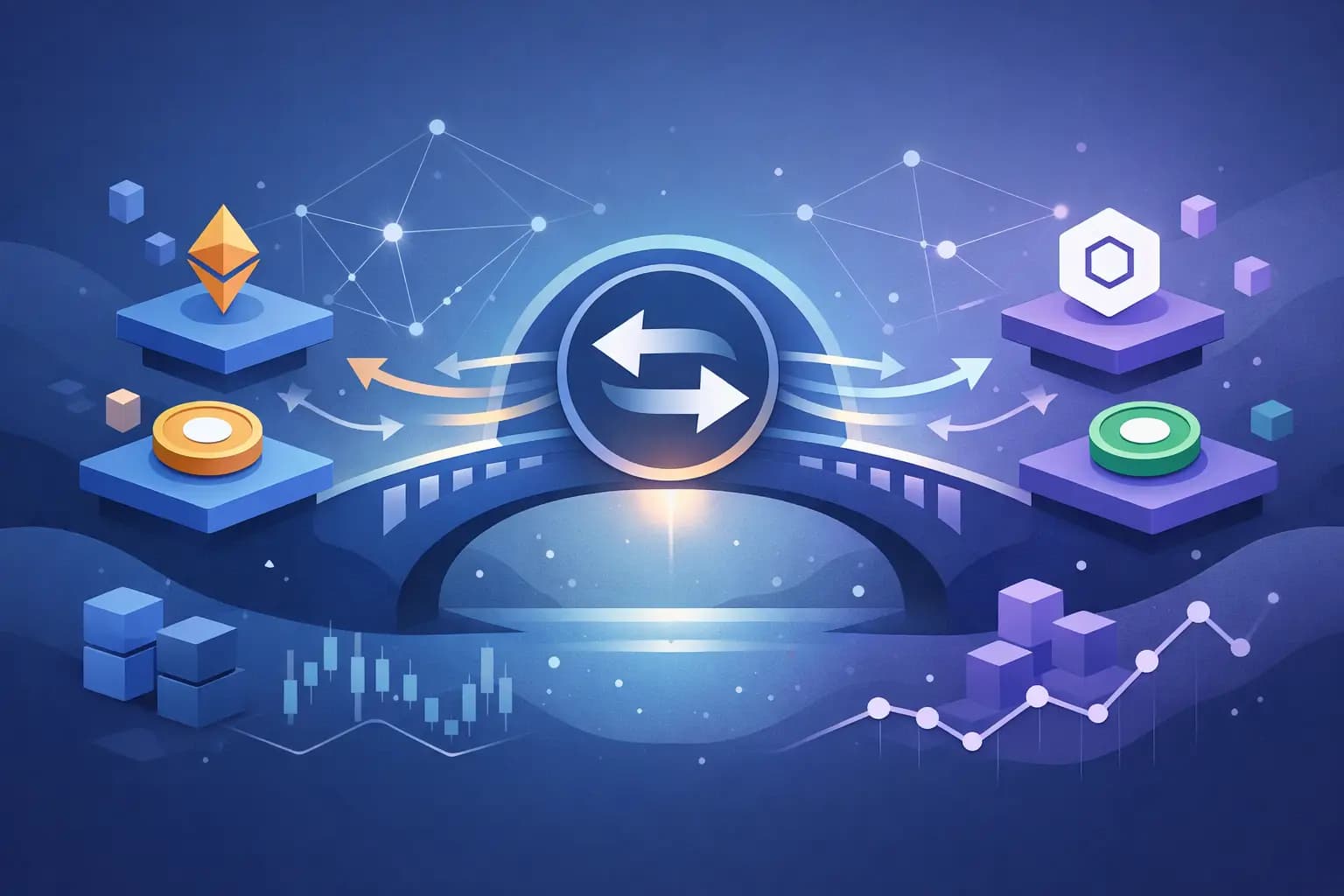
A cross chain swap aggregator is built for the moment a trade stops being just a trade. You may hold USDC on Arbitrum, see better liquidity for the asset you want on Solana, and need the result in a wallet you control - without manually comparing bridges, DEX pools, gas costs, and token versions across five tabs.
That is the job: turn a fragmented, multi-step move into one reviewable route. But convenience is not the same as certainty. The best route depends on liquidity, bridge design, destination-chain gas, price impact, and how quickly you need funds to arrive. A smart trader still checks the route before signing.
What a Cross Chain Swap Aggregator Actually Does
A standard swap aggregator searches liquidity sources on one network. It might split an ETH-to-USDC trade across multiple pools to reduce price impact. A cross chain swap aggregator has a larger problem to solve. It must coordinate the source-chain swap, the transfer of value between networks, and often a destination-chain swap before the final token reaches your wallet.
Behind one quoted transaction, the route may include three distinct actions. Your input token is exchanged on the source chain, a bridge or messaging layer carries the value or instructions across chains, and the output is delivered or swapped into the token requested on the destination chain. Some systems use canonical bridges, while others use liquidity networks, relayers, or intent-based settlement. The implementation changes the trade-offs.
For the trader, the useful output is simpler: a quote that shows what you send, what you expect to receive, the estimated completion time, and the fees attached to the route. That clarity matters because a low swap fee can be offset by an expensive bridge, thin destination liquidity, or a poor exchange rate hidden in the path.
Why Routing Across Chains Is Hard
No single blockchain shares a universal order book, gas market, or settlement clock. Ethereum mainnet, Arbitrum, Base, Solana, and other networks each have their own liquidity pools, token standards, finality assumptions, and infrastructure. Moving between them is not like transferring funds from one account to another inside the same exchange.
The aggregator has to compare routes that are not perfectly equivalent. One path might use a familiar bridge and take longer. Another may settle faster through a liquidity provider but charge more. A third can offer the best expected output at the time you request the quote, yet become less attractive if market volatility or network congestion changes before execution.
That is why “best” should never mean only the largest output number. For an active trader, best may mean fastest arrival because a position needs collateral now. For a long-term holder moving stablecoins, best may mean lower total cost and a route with infrastructure they understand. The right route is contextual.
Quotes Are Estimates, Not Guarantees
Most quotes are calculated from current onchain conditions. Pool reserves move, gas prices rise, and liquidity can disappear between quote generation and confirmation. If the trade includes multiple steps, there are more points where the final result can differ from the initial estimate.
Look for a minimum received amount or slippage protection. This is the threshold that helps prevent the trade from completing at an unexpectedly poor rate. Set it too tight and a volatile route may fail. Set it too loose and you give the route more room to execute below your intended price. There is no universal setting - token volatility and trade size matter.
The Costs to Check Before You Sign
A clean interface should separate costs instead of burying them inside a single output figure. You do not need to inspect every contract call to trade responsibly, but you should know what you are paying for.
The important costs usually include source-chain gas, destination-chain gas, swap fees or liquidity-provider fees, bridge or relayer fees, and price impact. There can also be a spread between the quoted rate and broader market prices. When the asset is illiquid, that spread may be the largest cost of all.
Consider a trader swapping USDC on one chain for SOL on another. A route with nearly zero bridge fees can still be worse if it reaches a shallow SOL pool and pays heavy price impact. Conversely, a slightly higher transfer fee may be worthwhile if it delivers into deeper liquidity with a materially better execution price.
Speed has a cost too. Faster routes often rely on liquidity already available on the destination chain or on actors willing to front capital before final settlement. That can be useful when timing matters, but it is worth understanding whether speed is being purchased through a higher fee, a smaller route capacity, or different trust assumptions.
A Better Pre-Trade Workflow
Start with the destination, not just the token. Confirm the exact chain where you need the asset. USDC on Ethereum, USDC on Arbitrum, and USDC on Solana can have different uses, addresses, and liquidity conditions. Sending value to the wrong network may not mean funds are lost, but recovering or repositioning them can add unnecessary cost and delay.
Next, compare the expected output against the total cost and estimated arrival time. If the aggregator presents multiple routes, do not automatically select the first one. Review whether it changes bridges, uses an unfamiliar intermediary asset, or requires a second transaction after funds arrive.
Then inspect the transaction approval. Token approvals allow a contract to spend a token from your wallet. Approve only the token and contract you expect, and consider limiting allowances rather than granting unlimited access when the extra convenience is not worth it. Your wallet confirmation screen is not a formality - it is your final control point.
Finally, make the first transfer smaller when using a new route, bridge, or destination wallet. This is especially useful for larger balances, newer ecosystems, and tokens with multiple versions. A small test costs time, but it can prevent an operational mistake from becoming an expensive one.
The Risks an Aggregator Cannot Remove
Aggregation reduces interface friction. It does not eliminate smart-contract risk, bridge risk, liquidity risk, or market risk. Each protocol in a route can introduce a dependency, and cross-chain transfers are generally more complex than a swap within one established pool.
There is also execution risk. If a route is partially completed and a destination action fails, the exact recovery process depends on the protocol design. Some routes can deliver an intermediate asset to your wallet. Others may require a claim action or support process. Read the route details before treating a cross-chain trade as instant and irreversible.
Fake token addresses are another practical threat. Ticker symbols are not enough. A token called USDC or ETH can be an unofficial representation, a wrapped asset, or a malicious imitation. Verify the asset details shown in your wallet and use routes that clearly identify the token and destination network.
No aggregator can guarantee a profit, a price move, or the security of every external protocol it touches. Its value is better visibility and more efficient route selection, not a replacement for position sizing or risk management.
From Fragmented Swaps to a Controlled Trading Stack
Cross-chain swaps are rarely isolated. The capital you move may become spot inventory, perpetuals collateral, yield capital, or a hedge against a position on another venue. That makes portfolio visibility as important as the swap quote itself.
Hypertradeworx is designed around that wider workflow: multi-chain access, market comparisons, and a unified portfolio view in a non-custodial environment. The goal is not to make every action automatic. It is to help traders see more of the market from one command center, then review and sign the actions they choose.
As routes become more sophisticated, keep the discipline simple: verify the destination chain, compare total execution cost, review approvals, and retain final authority over every signature. Fast access is valuable. Controlled access is what keeps it useful.